Posts

Genetics and Molecular Biotechnology

Image
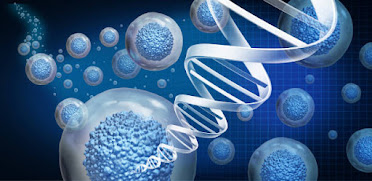
Molecular Biology and  Genetics  seek to know how the molecules that make up cells determine the behavior of living things. Biologists use molecular and genetic tools to know the function of those molecules in the complex milieu of the living cell. They study the genetic, chemical and physical attributes of cells, tissues and organisms and identify practical uses for this knowledge. Genetics and  molecular biology  has given rise to the clusters of techniques that we called such names as  genetic engineering . The techniques have rapidly become integral parts of modern biomedical and bio agricultural science, and they promise to transform our world.

Agricultural Biotechnology

Image
Agricultural Biotechnology   is a group of scientific techniques used to improve plants, animals and microorganisms. Based on an understanding of   DNA , scientists have developed solutions to improve agricultural productivity. Starting from the ability to identify genes that may confer advantages on certain crops and the ability to work with such characteristics very precisely,   biotechnology   enhances breeder’s ability to make improvements in crops and livestock. It enables improvements that are not possible with traditional crossing of related species alone. Uses- Genetic engineering Molecular markers Molecular diagnostics Vaccines Tissue culture
Image
Marine Biotechnology   exploits the diversity found in marine environments in terms of the form, structure, physiology and chemistry of marine organisms, many of which have no equivalent on land, in ways which enable new materials to be realised. Marine   biotechnology   is a knowledge generation and conversion process: it unlocks access to biological compounds and provides novel uses for them. By exploring and harnessing   marine materials , entirely new uses in areas far from the marine are likely to be found. Marine biotechnology techniques- Bioprocessing Bioharvesting Bioprospecting Bioremediation

Medical Biotechnology

Image
Medical biotechnology   is a branch of medicine that uses living cells and cell materials to research and then produce pharmaceutical and diagnosing products. These products help treat and prevent diseases. The main aim of medical biotechnology is the Prevention, Diagnosis and Treatment of diseases. Medical Biotechnology principles are applied in   pharmacology , gene therapy, stem cells and tissue engineering. It is a rapidly evolving field integrating knowledge obtained in molecular, cell biological, genetic and immunological scientific areas. The medical biotechnology field has helped bring to market microbial pesticides, insect-resistant crops, and environmental clean-up techniques. This discovery was the result of research studies related to deoxyribonucleic acid. Many scientists in the medical   biotechnology   field study genetic engineering which involves isolating, identifying and sequencing the human genes to determine their functions. Advancements- CRISPR ...

Agricultural Biotechnology

Image
Agricultural Biotechnology   is a group of scientific techniques used to improve plants, animals and microorganisms. Based on an understanding of   DNA , scientists have developed solutions to improve agricultural productivity. Starting from the ability to identify genes that may confer advantages on certain crops and the ability to work with such characteristics very precisely,   biotechnology   enhances breeder’s ability to make improvements in crops and livestock. It enables improvements that are not possible with traditional crossing of related species alone. Uses- Genetic engineering Molecular markers Molecular diagnostics Vaccines Tissue culture
Image
Biotechnology  is technology which utilizes biological systems, living organisms or parts of this to develop or create different products. Biotechnology is especially important in the field of medicine, where it facilitates the producing of therapeutic proteins and other drugs. Synthetic insulin and synthetic growth hormone and diagnostic tests to find various diseases are just some examples of how biotechnology is impacting medicine. It also proved helpful in refining industrial processes, in environmental clean-up and in agricultural production. Modern technology can also include  genetic engineering  as well as cell and tissue culture technologies. It is the research and development in the laboratory using  bioinformatics  for exploration, extraction, exploitation and production from any living organisms and any source of biomass. In medicine, modern biotechnology has many applications in areas such as pharmaceutical drug discoveries and production, pharmacog...

Tissue Engineering and Regenerative Medicines

Image
Tissue engineering is a relatively new and emerging branch of biotechnology . The development of advanced techniques in bioprinting and microfluidics now allow formation of autologous tissue grafts for various purposes such as organ transplantation, treating burns and regenerative medicine. Furthemore, tissue engineering provides alternatives to surgical reconstruction, transplants and other medical devices that are used to repair damaged tissues. Previously, tissue engineering was only limited to biomedical applications, plant  tissue cultures, but now these days some companies have also started to engineer  tissues on a small scale as an alternative to direct animal products such as  laboratory meat and laboratory leather etc. However, this area is still in development  and it needs to first reach a larger scale for products to be competitive in price with  directly obtained animal based products. Tissue engineering can be done by four types of biomaterials na...