Posts

Tissue Engineering and Regenerative Medicines

Image
Tissue engineering is a relatively new and emerging branch of biotechnology . The development of advanced techniques in bioprinting and microfluidics now allow formation of autologous tissue grafts for various purposes such as organ transplantation, treating burns and regenerative medicine. Furthemore, tissue engineering provides alternatives to surgical reconstruction, transplants and other medical devices that are used to repair damaged tissues. Previously, tissue engineering was only limited to biomedical applications, plant  tissue cultures, but now these days some companies have also started to engineer  tissues on a small scale as an alternative to direct animal products such as  laboratory meat and laboratory leather etc. However, this area is still in development  and it needs to first reach a larger scale for products to be competitive in price with  directly obtained animal based products. Tissue engineering can be done by four types of biomaterials na...

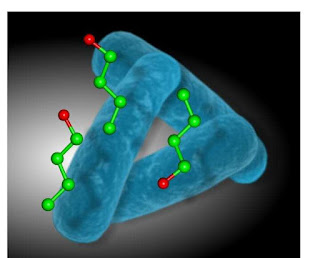
HRG-9 homologues regulate haem trafficking from haem-enriched compartments

Image
Haem is an iron-containing tetrapyrrole that is critical for a variety of cellular and physiological processes. Haem binding proteins are present in almost all cellular compartments, but the molecular mechanisms that regulate the transport and use of haem within the cell remain poorly understood. Here we show that haem-responsive gene 9 (HRG-9) (also known as transport and Golgi organization 2 (TANGO2)) is an evolutionarily conserved haem chaperone with a crucial role in trafficking haem out of haem storage or synthesis sites in eukaryotic cells. Loss of Caenorhabditis elegans hrg-9 and its paralogue hrg-10 results in the accumulation of haem in lysosome-related organelles, the haem storage site in worms. Similarly, deletion of the hrg-9 homologue TANGO2 in yeast and mammalian cells induces haem overload in mitochondria, the site of haem synthesis. We demonstrate that TANGO2 binds haem and transfers it from cellular membranes to apo-haemoproteins. Notably, homozygous tango2−/− zebrafis...

Scientists build bioreactors and engineer bacteria to advance biofuel research

Image
Researchers from the University of Kent's School of Biosciences have designed and built equipment that can be used to investigate bacterial biofuel production at a fraction of the cost of commercial systems. This technology was then used to demonstrate that bacterial genetic engineering could be used to enhance biofuel production. Commercial equipment used to study biofuel-producing bacteria can be prohibitively expensive, which prompted the team to build their own bioreactors that are accessible to most research laboratories. The researchers then used this equipment to verify that one of their genetically engineered variants of Clostridium bacteria could produce the biofuel butanol more rapidly. These research findings, which have been published in the journals Access Microbiology and Microbial Biotechnology, reveal that a subtle change to a single gene can result in remarkable changes to how sugars are converted to biofuel products. It is expected that this work will improve acc...

Use of antibodies in disease diagnosis and therapy

Image
Immunoassays Examples of immunoassay include titer of antibodies directed against Epstein-Barr virus or Lyme disease estimated from the blood. In absence of these antibodies it is presumed that either the person is not infected, or the infection occurred a ''very'' long time ago, and the B cells generating these specific antibodies have naturally decayed. For immunoassays, levels of individual classes of immunoglobulins are measured by nephelometry (or turbidimetry) to characterize the antibody profile of patient.  The Coombs test is also used for antibody screening in blood transfusion preparation. This test is used for antibody screening in antenatal women as well. Immunoassays are used in multiple sclerosis, psoriasis, and many forms of cancer including non-Hodgkin's lymphoma, colorectal cancer, head and neck cancer and breast cancer. Then there is the use of radiolabelled antibodies that can be used in the diagnosis of diseases as well. These radiolabelled antib...

Beyond vaccines: emerging technologies capable of unlocking the promise of biologically targeted mRNA therapeutics

Image
Immunization requires minimal protein expression levels, while mRNA therapeutics requires a 1,000-fold-higher protein level to reach a therapeutic threshold. Efficient delivery to solid organs remains challenging. Even the tissue bioavailability, circulatory half-life, and efficiency of the LNP-based carrier could be rate-limiting when it is delivered to the target tissue. Even with optimized mRNA chemical modifications and advanced LNPs, chronic dosing eventually activates innate immunity, parallelly attenuating therapeutic protein expression. An individual mRNA has a cap, 5′ and 3′ untranslated regions (UTRs), an open reading frame (ORF), and a polyadenylated (poly(A)) tail. There have been advancements in the design of each of these components. Most notable of these are: i) improved 5′ cap analogs that enhance translational capacity, but more importantly, the capping efficiency from 70% to 95%. ii) the poly(A) tail length optimization has proven critical for balancing the synthetic ...

An innovative nasal vaccine strategy to combat COVID

Image
The respiratory mucosa is the primary site of severe acute respiratory syndrome coronavirus 2 (SARS-CoV-2) infection in humans. However at this site, parenteral vaccination regimens cannot induce adequate protective immunity. Relying on intramuscular administration, these vaccines have been shown to induce high levels of circulating antibodies, memory B cells, and circulating effector cluster of differentiation (CD)4+ and CD8+ T cells in preclinical and clinical models. However, they fail to induce tissue-resident memory B (BRM) cells and T (TRM) cells and mucosal immunoglobulin G (IgG) and dimeric IgA. Recent preclinical assessments of vaccines delivered intranasally (IN) induced adequate mucosal immunogenicity at respiratory mucosa. They also conferred immune protection and reduced viral shedding in mice, hamsters, and nonhuman primates. Further, they induced cross-reactive immunity against sarbecoviruses. Researchers hypothesized systemic priming with messenger ribonucleic acid (mRN...

CRISPR ( Clustered Regularly Interspaced Short Palindromic Repeats)

Image
CRISPR based detection systems are poised to emerge as the next-generation point-of-care (POC) diagnostic platform, and have the potential to marry the advantages of RT-PCR (sensitive/specific) and rapid test kits (RTKs) (fast turnaround, user-friendly). These systems also circumvent the deficiencies of both RT-PCR (long turnaround, equipment/trained user requirement) and RTKs (low sensitivity). These POC platforms play a crucial role for effective medical intervention and transmission control of infectious diseases such as COVID-19. For these systems to be widely adopted clinically, developments have been made to enhance the thermal compatibility of CRISPR with isothermal amplification assays, towards a one-step, one-pot platform. The COVID-19 pandemic has strained healthcare systems. Sensitive, specific, and timely COVID-19 diagnosis is crucial for effective medical intervention and transmission control. RT-PCR is the most sensitive/specific, but requires costly equipment and trai...